Sunday, June 21, 2015

Meeting: June 16, 2015

Nancy French hosted the June meeting to discuss The Kitchen House by Kathleen Grissom. It was a delightful evening weather-wise, so we decided to hold the entire meeting out on the front deck.  Ellen Bowes, Kathy Day-Carey, Nancy French, Christe Gillespie, Linda Jenkins, Judy Lee, and Jo Smith attended. We talked a bit about the railroad ties that were on display in front of Nanc's home, of the great sadness due to the loss of Al Bratberg, and did some general catching up on family happenings in the last month.
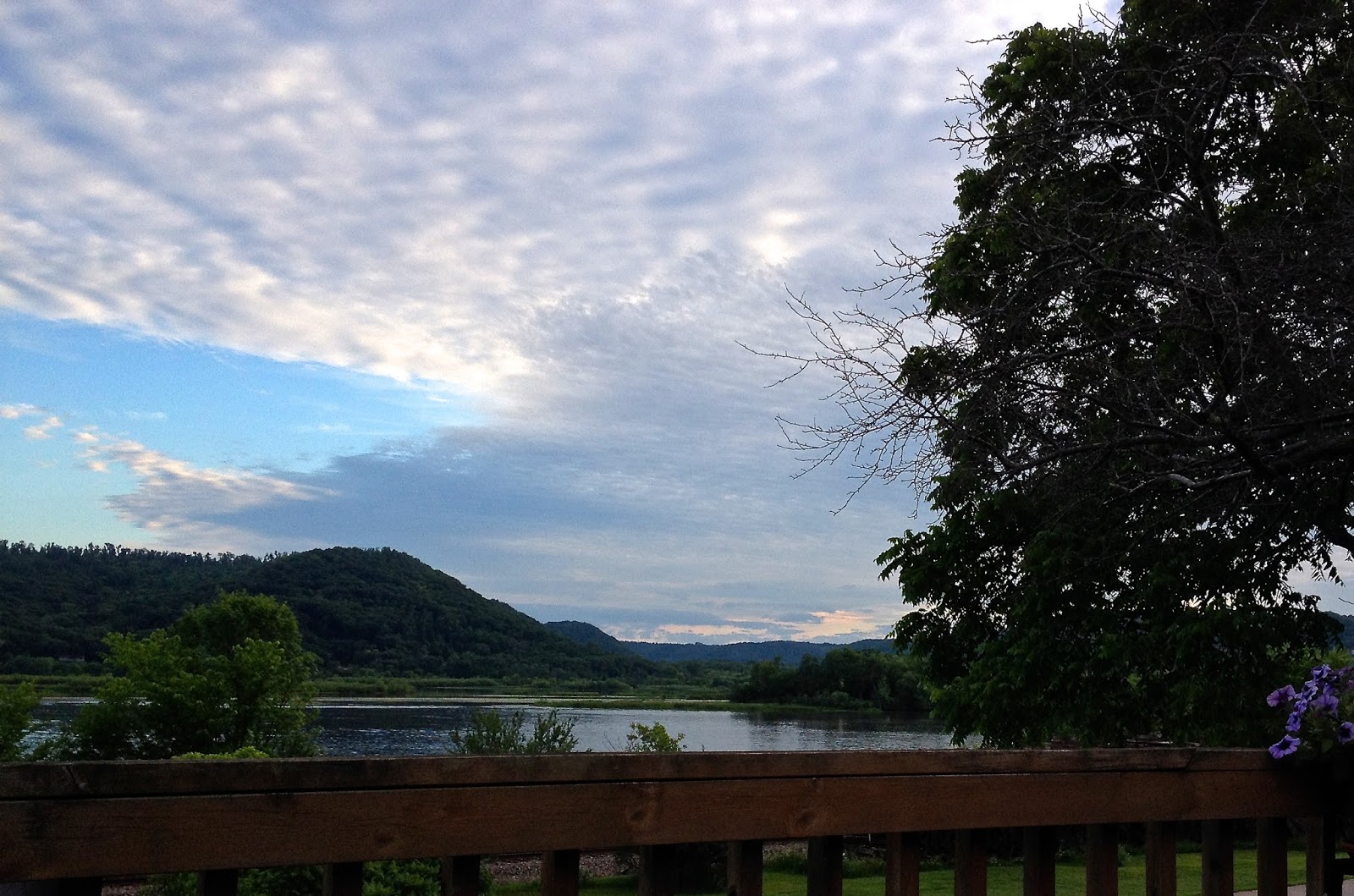
The view from the deck at Nanc's during the meeting

The Kitchen House was both a tender and horrifying depiction of a time when life was complicated and dangerous. This was a story of a young, orphaned Irish girl, Lavinia, who was brought to a tobacco plantation, put to work in the kitchen house, and raised among a family of plantation slaves.

In general, the feedback on The Kitchen House was positive, but we did have some issues with it, as well. We felt Kathleen Grissom had the makings of a powerful historical novel, but that it fell a bit short. She provided a bit too much melodrama. It seemed that every conceivable tragedy / shocking event that happened in this era was incorporated into the book. This included mistreatment and murder of slaves, the breaking up of families by slave owners, rape, starvation, mental illness, drug use, and spousal abuse. Sometimes, less is more.

Also, it is always frustrating as a reader when the characters don't communicate and make poor life decisions based on senseless misunderstandings.  

Jo felt the book ended way too suddenly.  It seemed like the author had a deadline to meet and just stopped writing. Jo read an excerpt from the last two paragraphs of the novel:
The barns were in good condition, and fortunately, a few good horses were left. It was agreed that we could build from them, and in the following years, we prospered after we established our name as providers of reliable horse stock.   
Belle, did come to live at Tall Oaks, and together we faced our future. When she died many years later, she was laid to rest in the big-house cemetery alongside her father.
I don't seem to remember what else was discussed, so I guess I'll end this blog entry just as abruptly as the book ended!

July meeting:

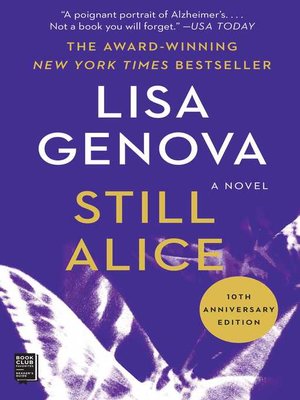
Book : Still Alice by Lisa Genova
Location: Ellen Bowes
Date: Thursday, July 9 2015
Time: 6:30pm
Upcoming meetings:

August: The Boys in the Boat by Daniel James Brown
September: Ruby by Cynthia Bond
October: To Kill a Mockingbird by Harper Lee
November: Movie night to watch To Kill a Mockingbird ???

Books we've read so far:

January 2014 - Grace (Eventually): Thoughts on Faith by Anne Lamott

February 2014 - The Book Thief by Markus Zusak
March 2014 - Life After Life by Kate Atkinson
April 2014 - The Absolutely True Diary of a Part-time Indian by Sherman Alexie
May 2014 - The Art of Racing in the Rain by Garth Stein
June 2014 - Breaking Free by Marilyn Sewell
July 2014 - The Orphan Train by Kristina Baker Kline
August 2014 - The Golem and the Jinni by Helene Wecker
September 2014 - Middlesex by Jeffrey Eugenides
October 2014 - The Invention of Wings by Sue Monk Kidd
November 2014 - The Dovekeepers by Alice Hoffman
December 2014 - No book.  Holiday gathering.
January 2015 - No book.  Watched The Book Thief
February 2015 - The Secret Keeper by Kate Morton
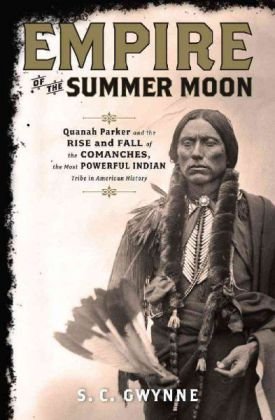
March 2015 - Empire of the Summer Moon by S.C. Gwynne
April 2015 - The Orchardist by Amanda Coplin
May 2015 - The Cellist of Sarajevo by Steven Galloway
June 2015 - The Kitchen House by Kathleen Grissom


Wednesday, May 20, 2015

Meeting: May 14, 2015

Linda Jenkins hosted a cozy meeting, providing delicious veggie soup, quinoa salad, and other treats.  Nancy French, Christe Gillespie, Julie Howard, Linda Jenkins, Annie Larkin, Jo Smith, and Liz Webster were in attendance.  Prior to discussing the book, we talked a bit about empty nesting, which was on Annie's mind with Emma graduating from high school, along with customary topics that included the DNR, Scott Walker, the railroad, and education.

The view from the Jenkins' house on a grey, rainy evening

The Cellist of Sarajevo was a book that exhibited human spirit under duress. Liz found the book difficult to finish from an emotional standpoint. Linda noted that the characters in the story were so busy surviving and figuring out how to cope that their world shrunk. They didn't have time to be in touch with friends, family, and neighbors.  Jo was wistful when the cellist's 22 days came to an end.  She wanted him to keep playing.  It seemed that many of us wished chapters had been devoted to the cellist, as well, as we would have liked to know more about him.

Julie read this excerpt about Arrow because she thought such stereotyping of people eventually could make a group of people less than human, so they were more easy to kill:
The Sarajevo she fought for was one where you didn't have to hate a person because of what they were. It didn't matter what you were, what your ancestors had been, or what your children would be. You could hate a person for what they did. You could hate a murderer, you could hate a rapist, and you could hate a thief. This is what first drove her to kill the men on the hills, because they were all these things. But now, she knows, she's driven mainly by a hatred of them, the idea of them as a group, and not by their actions.
Nanc and Jo also thought the excerpt touched on the Bosnian Serbs attempt to cleanse Sarajevo of non-Serbs, which was largely the reason for the siege of Sarajevo.

These quotes (also in Arrow chapters) stuck with Annie:
You don't choose what to believe.  Belief chooses you.
and
She realizes that for no particular reason she stumbled into the core of what it is to be human.  It's a rare gift to understand that your life is wondrous, and that it won't last forever.
and
... she felt an enveloping happiness to be alive, a joy made stronger by the certainty that someday it would all come to an end. 
and sadly,
The opportunity to die was everywhere, and it just wasn't that surprising when that opportunity became an event. 
The group in attendance decided we'd like to make a donation to Trempealeau's Shirley M Wright Library in the name of the Waterview Book Club.  The smallest tile on the donation board requires minimum of a $250 donation. It would seem that we could reach that amount with about a $25 donation from each member.  We will begin to collect the donations at our June meeting.


June Meeting:

Book: The Kitchen House by Kathleen Grissom
Location: Nancy French's
Date: Tuesday, June 16, 2015
Time: 6:30pm


We've also planned for the following months:

July: Still Alice by Lisa Genova
August: The Boys in the Boat by Daniel James Brown
September: Ruby by Cynthia Bond
October: To Kill a Mockingbird by Harper Lee
November: Movie night to watch To Kill a Mockingbird ???

Books we've read so far:


January 2014 - Grace (Eventually): Thoughts on Faith by Anne Lamott

February 2014 - The Book Thief by Markus Zusak
March 2014 - Life After Life by Kate Atkinson
April 2014 - The Absolutely True Diary of a Part-time Indian by Sherman Alexie
May 2014 - The Art of Racing in the Rain by Garth Stein
June 2014 - Breaking Free by Marilyn Sewell
July 2014 - The Orphan Train by Kristina Baker Kline
August 2014 - The Golem and the Jinni by Helene Wecker
September 2014 - Middlesex by Jeffrey Eugenides
October 2014 - The Invention of Wings by Sue Monk Kidd
November 2014 - The Dovekeepers by Alice Hoffman
December 2014 - No book.  Holiday gathering.
January 2015 - No book.  Watched The Book Thief
February 2015 - The Secret Keeper by Kate Morton
March 2015 - Empire of the Summer Moon by S.C. Gwynne
April 2015 - The Orchardist by Amanda Coplin
May 2015The Cellist of Sarajevo by Steven Galloway


Saturday, April 18, 2015

Meeting: April 16, 2015

Julie Howard provided delicious, theme-related food for our April meeting. With The Orchardist as her inspiration, she provided a number of apricot and apple food choices. No pressure on anyone to follow suit! Those in attendance were Ellen Bowes, Kathy Day-Carey, Nancy French, Julie Howard, Annie Larkin, and Jo Smith.

View from Julie's dining room

For the most part, we all liked The Orchardist, but it fell short of our loving it. It is a book that could only be recommended to someone who can enjoy vividly described landscapes and compelling, plainspoken characters. Some of us never got comfortable with Coplin's lack of quotation marks which resulted in having to re-read at times.

Annie read some poignant excerpts that give us insight into Talmadge's mother and Caroline Middey. 
Where some women wanted mere privacy, she yearned for complete solitude that verged on the violent; solitude that forced you constantly back upon yourself; even when you did not want it anymore. But she wanted it nonetheless. From the time she was a small girl, she wanted to be alone. The sound of other people's voices grated on her; to travel to town, to interact with others who were not Talmadge, or Talmadge's father or sister, was torture to her; it subtracted days from her life. And so they walked; to find a place that would absorb and annihilate her, a place to be her home, and the home for her children. A place to show her children, you belong to the earth, and the earth is hard. 
And:
And that was the point of children, thought Caroline Middey: to bind us to the earth and to the present, to distract us from death. A distraction dressed as a blessing: but dressed so well, and so truly, that it became a blessing. Or maybe it was the other way around: a blessing first, before a distraction. ... But she did not think any more about it because at her back, suddenly, the child woike from her nap, and she rose at once to go to her.
Ellen talked about the despair that Della felt and Annie followed that up with an excerpt that backed up Ellen's comments.
What was recognized as success  the applause, the exclamations, the job well done; she was already off the horse, pumping people's hands in congratulationsdid not fill her. Did not even begin to fill her. What she wanted was the despair, or something else that was found there. Something that lived with despair. But the moment she was inside it, she failed to find what it was she wanted so badly. And so she would ride again.
We were taken by how Talmadge reflected on how train travel bothered his sensibility.
He had moved slowly all of his life. He was used to seeing things drawn out of themselves by temperature and light, not by harsh action. But this was something different. This was how people lived, now.
Talmadge was a good person. He was a gentle soul who cared so much but had trouble expressing it. So much was left unsaid.

After getting to know the characters so intimately and the slow pace of knowing day-to-day life, Jo felt it was very jarring when Angelene sold the orchard and moved away.  Her whole life was the orchard; it was all she knew.  Jo felt the reader deserved a window into what kind of life she chose when she left the orchard.


May meeting: 

Book: The Cellist of Sarajevo by Steven Galloway
Location: Linda Jenkins
Date: May 14, 2015
Time: 6:30 pm


June book: The Kitchen House by Kathleen Grissom


Books we've read so far:


January 2014 - Grace (Eventually): Thoughts on Faith by Anne Lamott

February 2014 - The Book Thief by Markus Zusak
March 2014 - Life After Life by Kate Atkinson
April 2014 - The Absolutely True Diary of a Part-time Indian by Sherman Alexie
May 2014 - The Art of Racing in the Rain by Garth Stein
June 2014 - Breaking Free by Marilyn Sewell
July 2014 - The Orphan Train by Kristina Baker Kline
August 2014 - The Golem and the Jinni by Helene Wecker
September 2014 - Middlesex by Jeffrey Eugenides
October 2014 - The Invention of Wings by Sue Monk Kidd
November 2014 - The Dovekeepers by Alice Hoffman
December 2014 - No book.  Holiday gathering.
January 2015 - No book.  Watched The Book Thief
February 2015 - The Secret Keeper by Kate Morton
March 2015 - Empire of the Summer Moon by S.C. Gwynne
April 2015 - The Orchardist by Amanda Coplin


Monday, March 23, 2015

Meeting: March 19, 2015

We met at Nancy French's house and enjoyed the sunlight still streaming through the windows as we looked out at an open river.  We had a small group for this month's meeting with Ellen Bowes, Kathy Day-Carey, Nancy French, Annie Larkin, and Jo Smith in attendance.  

For those that haven't been checking, the CBS mini-series The Dovekeepers will be airing on March 31st and April 1st from 8:00-10:00pm both nights.  Nanc has set her DVR to record both nights and will save the recordings should anyone need a place to watch it.

As many non-attending book club members mentioned via e-mail prior to the meeting, Empire of the Summer Moon by S.C. Gwynne was difficult to sit down and read in long stretches.  It was easier to read in bits and pieces.  The book was a harrowing read, with all the brutality inflicted by both sides.

Nanc didn't like the way the book was organized and would have preferred the story be told in a more linear format. 

Ellen and Nanc felt like S.C. Gwynne used condescending language when describing the Comanche.  This is one such excerpt:
Thus the fateful clash between settlers from the culture of Aristotle, St. Paul, DaVinci, Luther, and Newton and aboriginal horsemen from the buffalo plans happened as though in a time warp -- as though the former were looking backwards thousands of years at pre-moral, pre-Christian, low-barbarian versions of themselves.
In addition, Gwynne writes of the atrocities against the white settlers, but didn't seem to judge the actions of the white settlers and their actions in the same way.

Kathy pointed out that Gwynne has received reviews that his work is an unbiased account. It appeared; however, that all of his references were from white settlers and military, with no accounts from Comanche sources.  It doesn't seem appropriate that the book was written entirely through the settler's lens.

Annie read an excerpt from Touch the Earth by T.C. McLuhan which gave a wonderful native american perspective.
We were lawless people, but we were on pretty good terms with the Great Spirit, creator and ruler of all.  You whites assumed we were savages.  You didn't understand our prayers. You didn't try to understand.  When we sang our praises to the sun or moon or wind, you said we were worshipping idols. Without understanding, you condemned us as lost souls just because our form of worship was different from yours.

We saw the Great Spirit's work in almost everything: sun, moon, trees, wind, and mountains.  Sometimes we approached him through these things. Was that so bad?  I think we have a true belief in the supreme being, a stronger faith than that of most whites who have called us pagans ...  Indians living close to nature and nature's ruler are not living in darkness.

Did you know that trees talk?  Well, they do.  They talk to each other, and they'll talk to you if you listen.  Trouble is, white people don't listen.  They never learned to listen to the Indians so I don't suppose they'll listen to other voices in nature. But I have learned a lot from trees: sometimes about the weather, sometimes about animals, sometimes about the Great Spirit.
Our book for April is The Orchardist, by Amanda Coplin.  The April meeting details are listed below, along with books selected for May and June.


April meeting:

Book: The Orchardist by Amanda Coplin
Location: Julie Howard's
Date: Thursday, April 16, 2015
Time: 6:30 pm

May book: The Cellist of Sarajevo by Steven Galloway

June book: The Kitchen House by Kathleen Grissom


Books we've read so far:

January 2014 - Grace (Eventually): Thoughts on Faith by Anne Lamott
February 2014 - The Book Thief by Markus Zusak
March 2014 - Life After Life by Kate Atkinson
April 2014 - The Absolutely True Diary of a Part-time Indian by Sherman Alexie
May 2014 - The Art of Racing in the Rain by Garth Stein
June 2014 - Breaking Free by Marilyn Sewell
July 2014 - The Orphan Train by Kristina Baker Kline
August 2014 - The Golem and the Jinni by Helene Wecker
September 2014 - Middlesex by Jeffrey Eugenides
October 2014 - The Invention of Wings by Sue Monk Kidd
November 2014 - The Dovekeepers by Alice Hoffman
December 2014 - No book.  Holiday gathering.
January 2015 - No book.  Watched The Book Thief
February 2015 - The Secret Keeper by Kate Morton
March 2015 - Empire of the Summer Moon by S.C. Gwynne

Monday, February 16, 2015

Meeting: February 12, 2015

Annie provided wonderful ambiance for our February meeting and our discussion of The Secret Keeper.  Those in attendance were Ellen Bowes, Kathy Day-Carey, Nancy French, Christe Gillespie, Annie Larkin, Judy Lee, and Jo Smith.  As usual, we caught up on what has been going on in each other's lives and enjoyed our time together.

There was a mixed reaction to the book, as some of us had trouble with the young Dorothy (Dolly).  While there are plenty of books that have characters you don't like, her character was troublesome because of her connection with the lovable Jimmy. It was also disconcerting to try to reconcile who Dolly was as a young, self-centered, shallow woman with the mature, loving wife and mother Dorothy became. Originally, Annie stopped reading the book after Dolly masterminded the plot to blackmail Vivian. Christe later convinced her to go back and finish reading the book due to the plot twist near the end.

Jo was bothered by the details in the book that she didn't feel contributed to the story in any way.  She felt that this detracted from the story and left the reader constantly wanting the author to get on with the story.

Christe read a long excerpt that she enjoyed.  
The Nicolson children all knew the story of Greenacres' acquisition by heart. The skeptical old farmer scratching his head when Dorothy knocked on his door, the birds nesting in the parlor fireplace as the farmer poured tea, the holes in the floor with planks laid across them like narrow bridges. Most importantly, no one was in any doubt as to their mother's immediate certainty that she must live in this place.  
The house, she explained to them many times, had spoken to her; she'd listened, and it turned out they'd understood one another very well indeed. Greenacres was an imperious old lady, a little worn, to be sure, cranky in her own way -- but who wouldn't be?  The deterioration, Dorothy could tell, concealed a great former dignity.  The house was proud and she was lonely, the sort of place that fed on children's laughter, and a family's love, and the smell of rosemary lamb roasting in the oven.  She had good honest bones and a willingness to look forwards rather than backwards, to welcome a new family and grow with them, to embrace their brand-new traditions.  It struck Laurel now, as it hadn't before, that her mother's description of the house might have been a self-portrait.
This house would never have spoken to the young Dolly.  I might add that Christe has a wonderful style and tone as she reads aloud.  She could have a new career recording audio books!

Annie shared a quote that struck her. The quote comes after a "sour nurse" gave Laurel the report on how her mother was faring, having bounced back after the birthday party which had tired her.
And then she smiled with a remarkable deficit of warmth and returned her attention to the plastic clipboard she was cleaving. 
Our book for March is Empire of the Summer Moon, by S.C. Gwynne.  This will be our first non-fiction selection.  The March meeting details are at the bottom of this blog entry.  No decisions have been made for our April book or our April meeting place. 


March meeting:

Book: Empire of the Summer Moon by S.C. Gwynne
Location: Nancy French's
Date: March 19, 2015
Time: 6:30 pm


Sunday, January 11, 2015

Meeting: January 8, 2015

We met at Jo Smith's house for our "movie night."  Those attending were Ellen Bowes, Nancy French, Christe Gillespie, Annie Larkin, Judy Lee, and Jo Smith.  While we ate some tasty snacks, we discussed various books we've read.  

Judy was in the middle of reading The Red Tent by Anita Diamant.  She thought it was difficult to get started and found herself re-reading much of the beginning of the book to fully grasp the content.  Ellen talked about All the Light We Cannot See by Anthony Doerr. This was another WWII story, this time about a French blind girl and German orphan boy. Annie talked about The Blue Bear by Lynn Schooler, Leaving Resurrection by Eva Saulitis, and Empire of the Summer Moon by S.C. Gwynne.  For our March read, we chose Empire of the Summer Moon, a non-fiction, historical account of the battle between the Comanche and white settlers.  Annie also mentioned Richard Peck, a young readers author, specifically mentioning his books, A Long Way from Chicago and The River Between Us.

After taking care of upcoming meeting details, Jo popped us popcorn and we were ready to view The Book Thief.  Due to the length of the film, we didn't really have time to compare and contrast the movie and the book.  There were a number of things that had to be left out of the movie, but I didn't feel like this detracted from the movie.  Usually, I'm disappointed with a film if I've read the book, but this was not the case this time.  I felt like most of the actors perfectly portrayed their respective characters from the book.  Perhaps if we ever meet to view a movie in the future, we should start the meeting a tad earlier, unless the film is significantly shorter than this 2+ hour movie.


February meeting:
     Book: The Secret Keeper by Kate Morton
     Location: Annie Larkin's
     Date: February 12, 2015
     Time: 6:30pm

March meeting:
     Book: Empire of the Summer Moon by S.C. Gwynne
     Location: Nancy French's
     Date: TBA
     Time: 6:30pm


Sunday, December 14, 2014

Christmas Gathering - December 11, 2014

In lieu of a regular book club meeting, we got together at Elmaro Vineyard for a holiday gathering.  Spouses were invited to take part.  Ellen and Jeff, Nanc, Christe and Steve, Julie and Bob, Linda and Jim, Annie and Paul, Judy and Scott, and Jo and John were all able to make it.  It was great to get to know the spouses, some of whom I had never met previously.

Rather than the usual half sheet of paper used to let us know what wines and food samples they were serving, they folded ours to make it look like a book.


After the wine tasting was complete, Annie (performing her duties as our unofficial spokesperson) gave a toast.


So our first year as a book club comes to a close.  And a successful year it has been.  On to 2015!

January meeting:
     Book: Report on or recommend any book (optional), we'll also watch The Book Thief
     Location: Jo Smith's
     Date: January 8, 2015
     Time: 6:30

February meeting:
     Book: The Secret Keeper by Kate Morton
     Location: Annie Larkin's
     Date: TBA
     Time: 6:30