Thursday, April 21, 2016

Meeting: April 14, 2016

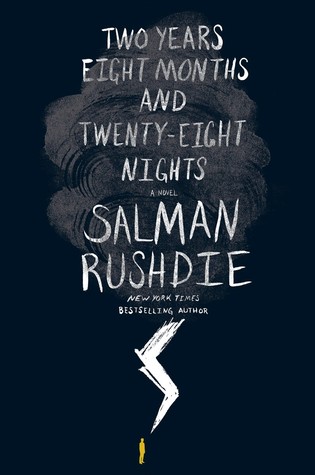
We met at Julie’s to discuss Two Years Eight Months and Twenty-Eight Nights by Salman Rushdie.  From the moment we arrived, the aroma from Julie’s culinary talents was inviting. The meal and the desserts were as good as anticipated!  Annie, Christe, Ellen, Jo, Judy, Julie, and Nanc attended. 

View from Julie's on beautiful day
Our non-book discussion included talking about the eagles that are attempting to build a nest in the pine trees in front of Jo’s house, Emma's travels and Annie having to trust that she'll stay safe, and Annie’s “DBW” (you had to be there). As Annie noted in her post-meeting e-mail, "Julie and I were talking before I left and she exclaimed how wonderful it is to be deepening our friendships - and I couldn't agree more. Each time we meet we go deeper into ourselves and what we hold dear. Thanks for sharing the 'real' parts of yourselves."

Eagles in Jo's pine tree
It appeared that Ellen was the only one who actually finished reading the book, although both Julie and Annie were nearly finished. The rest of us either never started, or gave up rather early in the book.

From what we were told by those who read the book, Dunia (the jinnia) wishes to save the world from four dark jinn who are set on bringing about devastation. Rushdie makes them responsible for the world’s horrors, such as using religion to justify killing people. The four dark jinn are defeated, and so the world does have hope.  But the world traded the ability to dream for “peace, prosperity, understanding, wisdom, goodness, and truth.” The implication is that the human gift of imagining can’t exist without hatred, anger, and destructive behaviors.

Julie agreed with the sentiment that if we took the religion out of God, people would believe in God.  She followed up by reading this excerpt:
“You will see, as time goes by,” said Ibn Rushd, “That in the end it will be religion that will make men turn away from God.  The godly are God’s worst advocates.  It may take a thousand and one years but in the end religion will shrivel away and only then will we begin to live in God’s truth.”
Ellen felt like Rushdie has an artist’s mind and thinks way too fast for the average reader.  
“This is a story from our past, from a time so remote that we argue, sometimes, about whether we should call it history or mythology. Some of us call it a fairy tale. But on this we agree: that to tell a story about the past is to tell a story about the present. To recount a fantasy, a story of the imaginary, is also a way of recounting a tale about the actual. If this were not true then the deed would be pointless, and we try in our daily lives to eschew pointlessness whenever possible.” 
Ellen also felt that parts of the book were funny and enjoyed the references to pop culture and other world events.
A tide of horror spread across the city and beyond and the president went on TV to calm the nation’s fears.  That night even this most articulate of chief executives looked ashen and at a loss; his familiar nostrums, we will not sleep until, those responsible will be, you harm the United States of America at your peril, make no mistake, my fellow Americans, this crime will be avenged, sounded hollow and impotent.  The president had no weapons that could deal with this attacker.
In general, no one felt like they could recommend this book to anyone, but there are some people who may enjoy this unconventional and funny read.


March meeting:

Book: Jewelweed by David Rhodes
Location: Nanc's
Date: Thursday, May 12, 2016
Time: 6:30pm 


Upcoming meetings:

June 9, 2016: Book TBA at Linda's
July 2016: Book TBA at Jo's


Books we've read so far:

January 2014 - Grace (Eventually): Thoughts on Faith by Anne Lamott
February 2014 - The Book Thief by Markus Zusak
March 2014 - Life After Life by Kate Atkinson
April 2014 - The Absolutely True Diary of a Part-time Indian by Sherman Alexie
May 2014 - The Art of Racing in the Rain by Garth Stein
June 2014 - Breaking Free by Marilyn Sewell
July 2014 - The Orphan Train by Kristina Baker Kline
August 2014 - The Golem and the Jinni by Helene Wecker
September 2014 - Middlesex by Jeffrey Eugenides
October 2014 - The Invention of Wings by Sue Monk Kidd
November 2014 - The Dovekeepers by Alice Hoffman
December 2014 - No book.  Holiday gathering.
January 2015 - No book.  Watched The Book Thief
February 2015 - The Secret Keeper by Kate Morton
March 2015 - Empire of the Summer Moon by S.C. Gwynne
April 2015 - The Orchardist by Amanda Coplin
May 2015 - The Cellist of Sarajevo by Steven Galloway
June 2015 - The Kitchen House by Kathleen Grissom
July 2015 - Still Alice by Lisa Genova
August 2015 - The Boys in the Boat by Daniel James Brown
September 2015 - Ruby by Cynthia Bond
October 2015 - To Kill a Mockingbird by Harper Lee
November 2015 - No book.  Watched To Kill a Mockingbird
December 2015 - No book.  Holiday gathering.
January 2016 - All the Light We Cannot See by Anthony Doerr
February 2016 - Just Mercy: A Story of Justice and Redemption by Bryan Stevenson 
March 2016 - Brooklyn by Colm Tóibín
April 2016 - Two Years Eight Months and Twenty-Eight Nights by Salman Rushdie


Wednesday, March 16, 2016

Meeting: March 10, 2016

We met at Ellen’s to socialize and discuss Brooklyn, by Colm Tóibín. Ellen served delightful theme-related potato soup and homemade bread, along with other fare, inspired by the Irish main character, Eilis Lacey. Annie, Christe, Ellen, Jo, Kathy, and Nanc attended. We talked about Christe’s aggressive bees, and Paul and Marah’s plans to visit Emma in Colorado, along with a long discussion of possible upcoming books, although we only made one selection.

The sun had just set as we arrived at Ellen's (photo credit: Jo Smith)

The book was set in the early 1950s, partly in Ireland and partly in Brooklyn, and follows Eilis who, as Julie noted via e-mail, "was quite weak and so influenced by whoever she was with." We all agreed that the book was relatively flat, due to Eilis’ dull life, but a pleasant enough read to finish due to it being technically well written. Kathy thought Tóibín did a credible job writing from a female perspective. 
“She was nobody here. It was not just that she had no friends and family; it was rather that she was a ghost in this room, in the streets on the way to work, on the shop floor. Nothing meant anything. The rooms in the house on Friary Street belonged to her, she thought; when she moved in them she was really there. In the town, if she walked to the shop or to the Vocational School, the air, the light, the ground, it was all solid and part of her, even if she met no one familiar. Nothing here was part of her. It was false, empty, she thought. She closed her eyes and tried to think, as she had done so many times in her life, of something she was looking forward to, but there was nothing. Not the slightest thing. Not even Sunday. Nothing maybe except sleep, and she was not even certain she was looking forward to sleep. In any case, she could not sleep yet, since it was not yet nine o’clock. There was nothing she could do. It was as though she had been locked away.” 
We also noted that we were teased a bit with potential plot threads: a brilliant bookkeeping law professor who is impressed by her, an Italian boyfriend who looks unlike the rest of his family, the uncomfortable scene where she tries on bathing suits in front of Miss Fortini, her unpleasant landlord and her unpleasant old boss communicating and exposing her brief "double life.” But none of those story lines were pursued.

It didn’t feel like the character grew through the course of the story, but when she returned to Ireland, many friends and family members commented that she had changed.
“You have changed, “ Nancy said. “You look different. Everything about you is different, not for those who know you, but for people in town who only know you to see.”
“What’s changed?”
 “You seem more grown up and serious. And in your American clothes you look different. You have an air about you.”
Linda reported via e-mail that she "enjoyed Brooklyn and it was fun to read a story of a woman fending for herself in a new country after WWll. Interesting to read how different cultures were meeting each other and breaking 'some' barriers."  We agreed that the most interesting aspect of the book was reading about immigration during that era.

March meeting:

Book: Two Years Eight Months and Twenty-Eight Nights by Salman Rushdie
Location: Julie's
Date: Thursday, April 14, 2016
Time: 6:30pm


Upcoming meetings:

May 2016: Book TBA at Nanc's
June 2016: Book TBA at Linda's


Books we've read so far:

January 2014 - Grace (Eventually): Thoughts on Faith by Anne Lamott
February 2014 - The Book Thief by Markus Zusak
March 2014 - Life After Life by Kate Atkinson
April 2014 - The Absolutely True Diary of a Part-time Indian by Sherman Alexie
May 2014 - The Art of Racing in the Rain by Garth Stein
June 2014 - Breaking Free by Marilyn Sewell
July 2014 - The Orphan Train by Kristina Baker Kline
August 2014 - The Golem and the Jinni by Helene Wecker
September 2014 - Middlesex by Jeffrey Eugenides
October 2014 - The Invention of Wings by Sue Monk Kidd
November 2014 - The Dovekeepers by Alice Hoffman
December 2014 - No book.  Holiday gathering.
January 2015 - No book.  Watched The Book Thief
February 2015 - The Secret Keeper by Kate Morton
March 2015 - Empire of the Summer Moon by S.C. Gwynne
April 2015 - The Orchardist by Amanda Coplin
May 2015 - The Cellist of Sarajevo by Steven Galloway
June 2015 - The Kitchen House by Kathleen Grissom
July 2015 - Still Alice by Lisa Genova
August 2015 - The Boys in the Boat by Daniel James Brown
September 2015 - Ruby by Cynthia Bond
October 2015 - To Kill a Mockingbird by Harper Lee
November 2015 - No book.  Watched To Kill a Mockingbird
December 2015 - No book.  Holiday gathering.
January 2016 - All the Light We Cannot See by Anthony Doerr
February 2016 - Just Mercy: A Story of Justice and Redemption by Bryan Stevenson 
March 2016 - Brooklyn by Colm Tóibín


Tuesday, February 16, 2016

Meeting: February 11, 2016

What a delightful evening at Judy’s! The evening began by loading our plates with yummy veggie lasagna and lots of other snacks before we moved into the living room alongside the cozy fire. With so many members off sunning themselves in warmer climes, there were only 5 in attendance: Annie, Christe, Judy, Kathy, and Nanc.

Winter view from the Lee's deck (photo credit: Scott Lee)

As often happens, we find out new things about one another in the pre-book discussion. While Annie is quite active, she told us that she doesn’t like gyms. Who knew? Even though two former Physical Education teachers were present, we were not offended by her revelation. In fact, I’m sure Judy and I (and Julie) taught many a student who shared Annie’s feelings about gyms! And, we also learned that Christe played team sports in high school. In softball, she was a 3rd baseman and loved firing the ball across the infield to throw batters out at 1st with her strong arm. And she was bit miffed when Aric’s baseball coach told her that Aric had his dad to thank for his great arm!  

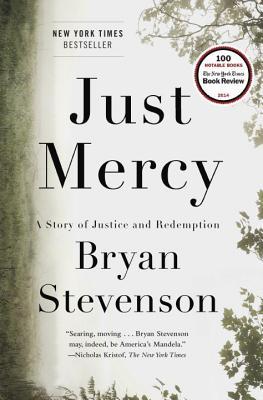
When our conversation turned to Just Mercy: A Story of Justice and Redemption by Bryan Stevenson, Annie grabbed her computer and pulled up a TED talk that Stevenson had done several years ago. In addition to doggedly working for social justice through his Equal Justice Initiative, Stevenson is a gifted orator, as well. It is well worth the 20-25 minutes to watch it.

Quite by accident, we chose this very appropriate book for February which is Black History Month. Just Mercy is a powerful story of those who have been wrongly convicted, of children on death row and serving life sentences, and of malfeasance and racism by public officials. It would be impossible to read this book and not be affected by it.
We are all implicated when we allow other people to be mistreated. An absence of compassion can corrupt the decency of a community, a state, a nation. Fear and anger can make us vindictive and abusive, unjust and unfair, until we all suffer from the absence of mercy and we condemn ourselves as much as we victimize others. The closer we get to mass incarceration and extreme levels of punishment, the more I believe it's necessary to recognize that we all need mercy, we all need justice, and — perhaps — we all need some measure of unmerited grace.
Although the narrative of Walter McMillan dominates the storyline, many other anecdotes of our flawed justice system are threaded through the book. In 1993, Walter’s conviction was overturned after serving six years on death row.  Bryan and Walter were often invited to speaking events.  On one such trip, Walter is talking with Bryan as they traveled.
“Bryan,” he said at some point during our short flight, “capital punishment means ‘them without the capital get the punishment.
Both in the book and in the TED talk, Stevenson relates his meeting civil rights activist, Rosa Parks, on a number of occasions, and how he was invited there “just to listen.”  And then one day, Parks asked him about his work:
"Well, I have a law project called the Equal Justice Initiative, and we're trying to help people on death row. We're trying to stop the death penalty, actually. We're trying to do something about prison conditions and excessive punishment. We want to free people who've been wrongly convicted. We want to end unfair sentences in criminal cases and stop racial bias in criminal justice. We're trying to help the poor and do something about indigent defense and the fact that people don't get the legal help they need. We're trying to help people who are mentally ill. We're trying to stop them from putting children in adult jails and prisons. We're trying to do something about poverty and the hopelessness that dominates poor communities. We want to see more diversity in decision-making roles in the justice system. We're trying to educate people about racial history and the need for racial justice. We're trying to confront abuse of power by police and prosecutors —" I realized that I had gone on way too long, and stopped abruptly. 
Ms. Parks leaned back, smiling. "Ooooh, honey, all that's going to make you tired, tired, tired.”
Judy mentioned that she disagreed with Stevenson’s opposition to drug testing welfare recipients, feeling that there are many who are abusing drugs and the system. The only reference I could find relating to drugs and welfare was the following, but I’m not sure this is what Judy was referring to in her comments.
In 1996, Congress passed welfare reform legislation that gratuitously included a provision that authorized states to ban people with drug convictions from public benefits and welfare.  The population most affected by this misguided law is formerly incarcerated women with children, most of whom were imprisoned for drug crimes.  These women and their children can no longer live in public housing, receive food stamps, or access basic services.  In the last twenty years, we’ve created a new class of ‘untouchables’ in American society, made up of our most vulnerable mothers and their children.
Bryan Stevenson will be speaking at Luther College in Deborah, IA on Tuesday, March 1st at 7:00. Annie feels like Marah can probably assist in purchasing tickets if anyone would like to attend.  


March meeting:

Book: Brooklyn by Colm Toibin
Location: Ellen’s
Date: Thursday, March 10, 2016
Time: 6:30pm


Upcoming meetings:

April 2016: Book TBA at Julie's
May 2016: Book TBA at Nanc's
June 2016: Book TBA at Linda's

Books we've read so far:

January 2014 - Grace (Eventually): Thoughts on Faith by Anne Lamott
February 2014 - The Book Thief by Markus Zusak
March 2014 - Life After Life by Kate Atkinson
April 2014 - The Absolutely True Diary of a Part-time Indian by Sherman Alexie
May 2014 - The Art of Racing in the Rain by Garth Stein
June 2014 - Breaking Free by Marilyn Sewell
July 2014 - The Orphan Train by Kristina Baker Kline
August 2014 - The Golem and the Jinni by Helene Wecker
September 2014 - Middlesex by Jeffrey Eugenides
October 2014 - The Invention of Wings by Sue Monk Kidd
November 2014 - The Dovekeepers by Alice Hoffman
December 2014 - No book.  Holiday gathering.
January 2015 - No book.  Watched The Book Thief
February 2015 - The Secret Keeper by Kate Morton
March 2015 - Empire of the Summer Moon by S.C. Gwynne
April 2015 - The Orchardist by Amanda Coplin
May 2015 - The Cellist of Sarajevo by Steven Galloway
June 2015 - The Kitchen House by Kathleen Grissom
July 2015 - Still Alice by Lisa Genova
August 2015 - The Boys in the Boat by Daniel James Brown
September 2015 - Ruby by Cynthia Bond
October 2015 - To Kill a Mockingbird by Harper Lee
November 2015 - No book.  Watched To Kill a Mockingbird
December 2015 - No book.  Holiday gathering.
January 2016 - All the Light We Cannot See by Anthony Doerr
February 2016 - Just Mercy: A Story of Justice and Redemption by Bryan Stevenson


Sunday, January 10, 2016

Meeting: January 7, 2016

Thanks to Annie for writing up the following detailed account of this month's meeting!

After not seeing each other for a month, there’s always lots to catch up on – what we’ve been doing, what our families are doing, what’s going on in the neighborhood, what we’ve been thinking and feeling – so it’s no surprise that we didn’t dive into all the delicious food that Christe prepared for us until 8:00! Our mouths were too busy to eat right away!! But lo and behold, as we sat down to eat in the candle light by the fireplace, we actually spent the rest of the evening talking about (of all things!) the book (All the Light We Cannot See by Anthony Doerr)! Annie, Christe, Ellen, Judy, and Julie attended this month's meeting. 

A winter peek at the river from Christe's driveway

But before we get into a recap of our book discussion…thanks to Christe for her hospitality and warm, inviting atmosphere! Enchiladas are no picnic to make, and she took time after a full day’s work to whip up a wonderfully delicious meal for us. Praise to the cook!

I have no idea how Nanc does this every month – even with me taking some furious notes, I feel that I missed key points that were discussed. With that said, I was able to grab onto some threads of our conversation…here goes:

We were all awed by Doerr’s use of imagery/poetic language, especially considering the topic. Here are some examples:
His voice is low and soft, a piece of silk you might keep in a drawer and pull out only on rare occasions, just to feel it between your fingers. 
Music spirals out of the radios, and it is splendid to drowse on the davenport, to be warm and fed, to feel the sentences hoist her up and carry her somewhere else. 
I have been feeling very clearheaded lately and what I want to write about today is the sea. It contains so many colors. Silver at dawn, green at noon, dark blue in the evening. Sometimes it looks almost red. Or it will turn the color of old coins. Right now the shadows of clouds are dragging across it, and patches of sunlight are touching down everywhere. White strings of gulls drag over it like beads. It is my favorite thing, I think, that I have ever seen. Sometimes I catch myself staring at it and forget my duties. It seems big enough to contain everything anyone could ever feel.
We all come into existence as a single cell, smaller than a speck of dust. Much smaller. Divide. Multiply. Add and subtract. Matter changes hands, atoms flow in and out, molecules pivot, proteins stitch together, mitochondria send out their oxidative dictates; we begin as a microscopic electrical swarm. The lungs the brain the heart. Forty weeks later, six trillion cells get crushed in the vise of our mother’s birth canal and we howl. Then the world starts in on us.
Having the main character be a young, blind girl added much to the storyline – being so dependent, yet being so strong.
When I lost my sight, Werner, people said I was brave. When my father left, people said I was brave. But it is not bravery; I have no choice. I wake up and live my life. Don't you do the same? 
There is pride, too, though - pride that he has done it alone. That his daughter is so curious, so resilient. There is the humility of being a father to someone so powerful, as if he were only a narrow conduit for another, greater thing. That's how it feels right now, he thinks, kneeling beside her, rinsing her hair: as though his love for his daughter will outstrip the limits of his body. The walls could fall away, even the whole city, and the brightness of that feeling would not wane.
Of course with the setting being WWII, there were those hard parts of the story to move through – the conditioning of the boys, Frederick’s brutal attack, bombing/killing in general – but it was felt that by Doerr’s use of language, it was easier to wade through the ‘ick’, and the short chapters were a great tool to engage and disengage with the various story lines that were being tied together.

Ellen enjoyed ‘the worlds within worlds’ (literally speaking even, with the models that Marie Laure’s father makes) and the internal/external conflict and symbolism throughout the story.

Christe talked about her interest in learning more about Saint-Malo and also of how it would be a whole different existence without eyesight (sorry, Christe, I can’t make sense of my notes, but I liked what you said!)

Julie pointed out how Marie Laure could ‘smell fear’ and then spoke of a workshop she had attended years ago about how fear actually does smell and how she could then detect it in a subsequent meeting with a parent.

Annie was all about the use of figurative language and had more quotes jotted down than there was time for!

Judy hadn’t finished the book, but was fascinated all the same. 

We spent a lot of time discussing the key and the diamond…and what the heck happened anyway?! Julie paged through the book to find the various clues and read:
For a week he lives in the strange greenish light beneath the canvas of that huge tent, his duffel clutched in one hand and the hard corners of the little wooden house clamped in the other. When he has the strength, he fiddles with it. Twist the chimney, slide off the three panels of the roof, look inside. Built so cleverly.
So…when I googled ‘what happened to the diamond in all the light…’ it went right to that page that Julie read. Here are more snippets of it:
Werner’s body seems to have gone weightless under his blanket, and beyond the flapping tent doors, the trees dance and the clouds keep up their huge billowing march, and he swings first one leg and then the other off the edge of the bed. 
"Ernst,” says the man beside him. “Ernst.” But there is no Ernst; the men in the cots do not reply; the American soldier at the door of the tent sleeps. Werner walks past him into the grass. 
The wind moves through his undershirt. He is a kite, a balloon. 
The moonlight shines and billows; the broken clouds scud above the trees. Leaves fly everywhere. But the moonlight stays unmoved by the wind, passing through clouds, through air, in what seems to Werner like impossibly slow, imperturbable rays. They hang across the buckling grass. 
Why doesn’t the wind move the light? 
Across the field, an American watches a boy leave the sick tent and move against the background of the trees. He sits up. He raises his hand. 
“Stop,” he calls. 
“Halt,” he calls. 
But Werner has crossed the edge of the field, where he steps on a trigger land mine set there by his own army three months before, and disappears in a fountain of earth.
Again – I wish I could have been more accurate on some of the details we discussed, but feel that I at least captured the main threads of discussion.  I have a new appreciation for Nancy’s skills at our monthly recap without even jotting a thing down!! You rock, Nanc!

February meeting:

Book: Just Mercy: A Story of Justice and Redemption by Bryan Stevenson
Location: Judy's
Date: Thursday, February 11, 2016
Time: 6:30pm

Upcoming meetings:

March 2016: Brooklyn by Colm Toibin at Ellen's
April 2016: TBA at Julie's
May 2016: TBA at Nanc's
June 2016: TBA at Linda's

Books we've read so far:

January 2014 - Grace (Eventually): Thoughts on Faith by Anne Lamott
February 2014 - The Book Thief by Markus Zusak
March 2014 - Life After Life by Kate Atkinson
April 2014 - The Absolutely True Diary of a Part-time Indian by Sherman Alexie
May 2014 - The Art of Racing in the Rain by Garth Stein
June 2014 - Breaking Free by Marilyn Sewell
July 2014 - The Orphan Train by Kristina Baker Kline
August 2014 - The Golem and the Jinni by Helene Wecker
September 2014 - Middlesex by Jeffrey Eugenides
October 2014 - The Invention of Wings by Sue Monk Kidd
November 2014 - The Dovekeepers by Alice Hoffman
December 2014 - No book.  Holiday gathering.
January 2015 - No book.  Watched The Book Thief
February 2015 - The Secret Keeper by Kate Morton
March 2015 - Empire of the Summer Moon by S.C. Gwynne
April 2015 - The Orchardist by Amanda Coplin
May 2015 - The Cellist of Sarajevo by Steven Galloway
June 2015 - The Kitchen House by Kathleen Grissom
July 2015 - Still Alice by Lisa Genova
August 2015 - The Boys in the Boat by Daniel James Brown
September 2015 - Ruby by Cynthia Bond
October 2015 - To Kill a Mockingbird by Harper Lee
November 2015 - No book.  Watched To Kill a Mockingbird
December 2015 - No book.  Holiday gathering.
January 2016 - All the Light We Cannot See by Anthony Doerr